
What Have We Become?
How Christopher Nolan's The Odyssey builds upon the warnings of Oppenheimer

The Odyssey is a marvel of filmmaking execution where the marriage between Christopher Nolan and Homer’s The Odyssey feels fated. The spectacle of the iconic 3,000 year old story pairs perfectly with Christopher Nolan’s established storytelling prowess, and watching The Odyssey on the biggest screen possible feels like a culmination of all of Christopher Nolan’s strengths.
And it is. Just not in the ways you might think.
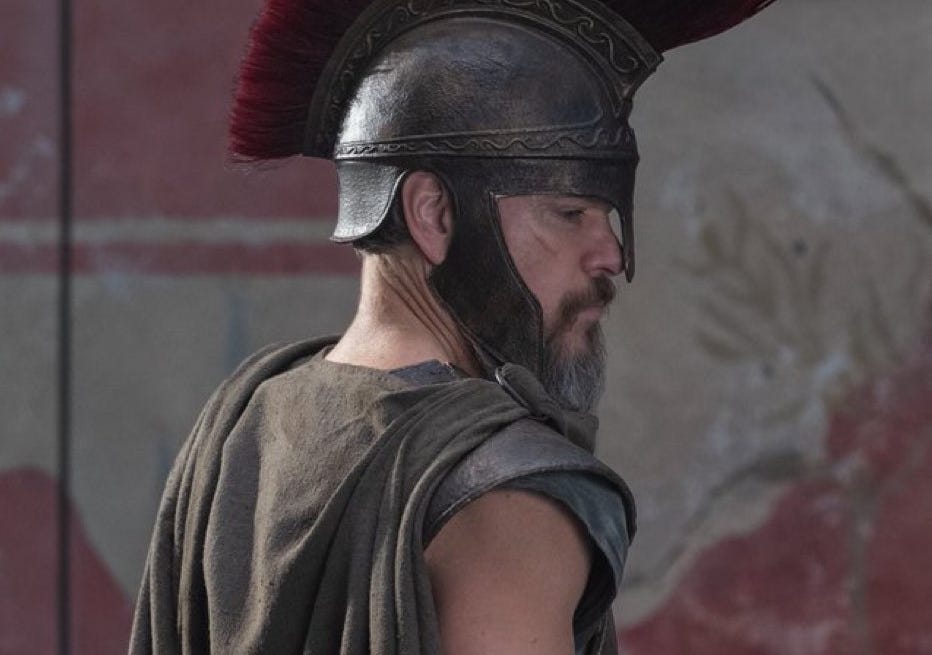
The Odyssey draws distinct parallels to Nolan’s previous films, many of which seem keenly invested in protagonists who must undertake extraordinary journeys to reach their families (the obvious two are Inception and Interstellar). And he’s already touched on the rich narrative of survival in times of war (a specific shoutout to Dunkirk).
I’d even argue that many of the visual motifs and set pieces we’ve enjoyed over the years have all had their roots in the imagery contained within The Odyssey. A character washing ashore along a long desolate beach signals the literal start of Inception. The harrowing scene of the soldiers trapped in the boat waiting for the rising tide in Dunkirk feels eerily similar to the environment Nolan captures within the Trojan Horse sequence.
But I’m most interested in an emerging characteristic of Nolan’s films that has left me with a sinking feeling I’ve struggled to shake in the three years since my first screening of Oppenheimer. In both that film and now with The Odyssey, the audience is forced to interrogate the consequences of man’s blind ambitions, particularly in the name of war. We see the actions they take, but rather than paint those actions as valorous, Nolan lets the characters struggle with the moral reckoning of a society that is now capable of such horrors.
In Oppenheimer, we see the main character slowly deal with the magnitude of his involvement in building the first nuclear weapon. Excuses are made – that it was a time of war, that the Germans were going to get there first if we hadn’t intervened, that dropping the bombs was essential to ending the war – but nothing works to absolve Oppenheimer of his growing guilt. By the time we see that final image of his face, worn by the weight of his decisions, we can almost feel his eyes as they plead out at the camera.
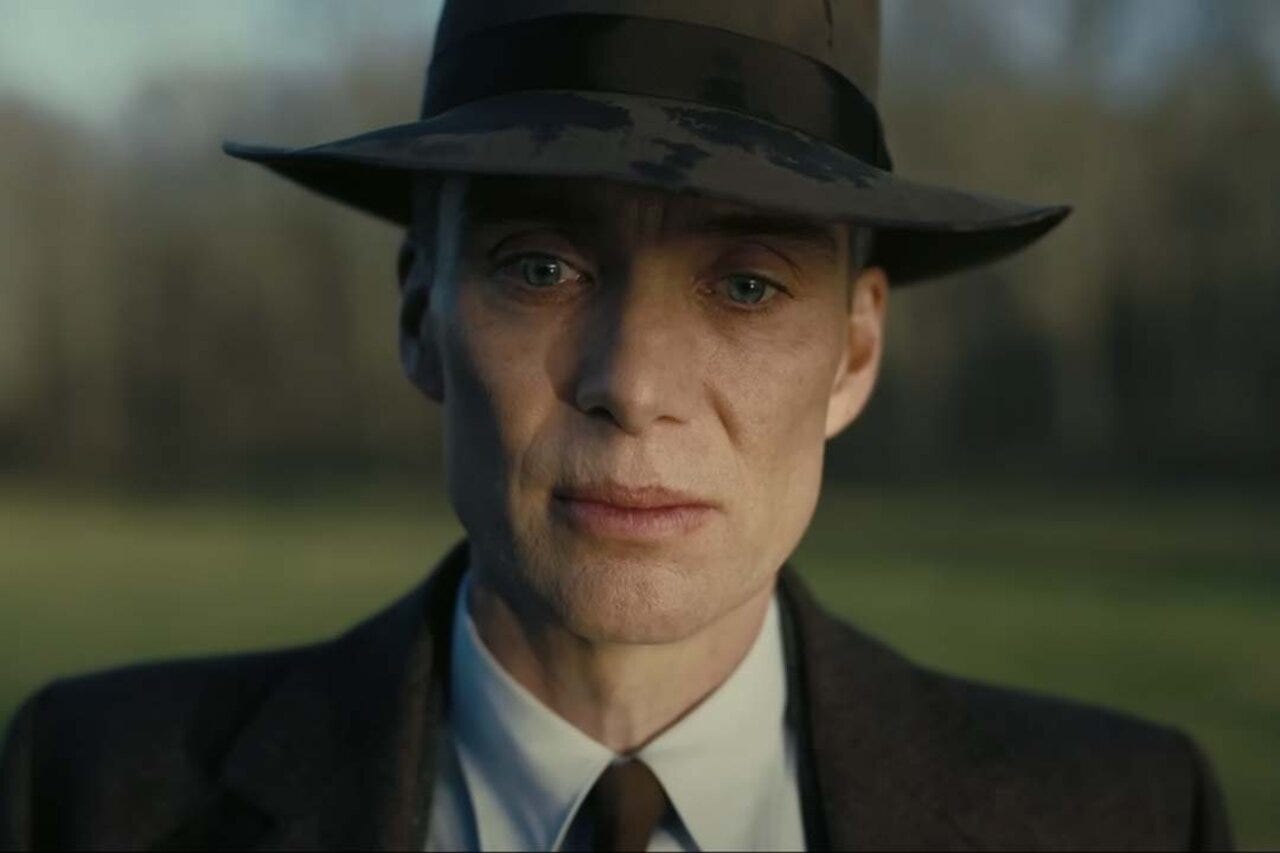
What have I done?
Like a baton in a relay race, Nolan carries that question forward and fuses it within his interpretation of The Odyssey. This time, the excuses of war are all but stripped away, and what Nolan builds in its place is a far more complex and, ultimately, disturbing message.
We hear talk of Zeus’s law throughout The Odyssey, that the backbone of this society relies upon a person’s moral imperative to treat others as they want to be treated. For example, when visitors enter Ithaca, they are invited to enjoy shelter and food. It is an essential element of civilized life, and when Circe tricks Odysseus’s men by leaning on (and ultimately exploiting) that expectation, it primarily works to strengthen its apparent importance.
There is also mention of sea peoples throughout the film – a dangerous army of men whose reputation for cruelty has echoed throughout all of the kingdoms. The threat of these impending sea peoples looms over the film.
It’s at this point that I want to point to the famous Trojan horse and particularly its execution within this film. There have been countless interpretations of this iconic sequence and, until this point, many of those iterations have reduced it to a moment of deft tactical brilliance. Previous versions of this sequence are made to feel cool, but Nolan is not interested in singing its praises. He paints the sequence in the starkest of terms. The film itself starts with the iconography, pointing to its significance as a crucial element to understanding the film’s message. We then revisit it through the eyes of Menelaus, a seasoned veteran of the war who offers his perspective of being inside the horse and, ultimately, succeeding in sacking the city of Troy from within.
It isn’t until the end of the film, when we see the fall of Troy from Odysseus’ perspective, that we become fully aware of the horror that this iconography comes to represent. In a poignant scene of Odysseus obscuring his identity to Penelope by pretending to be a downtrodden war veteran, he bares his soul and tells her of the hard truths of war.
He and his men, after years of prolonged conflict, decided to trick the Trojans by appealing to their humanity. Veiled as a sacred offering to the goddess Athena, they presented the Trojans with this large horse. The Trojans, acting in accordance with Zeus’ law, accepted the gift. Odysseus and his men take advantage of the Trojans’ humanity, and it plays almost like a war crime. In what I think to be the most important line of the film, Penelope is shaken by this news, and lets out a haunted, “you are the sea peoples?” It isn’t anger or disgust in her voice, it’s anguish. She’s lived with the growing fear of these barbarous sea peoples approaching. That fear was a specter looming over all of civilized society, and her husband’s involvement is devastating.
Oppenheimer asks, what have I done? But, Odysseus builds upon that and asks, what have I become?
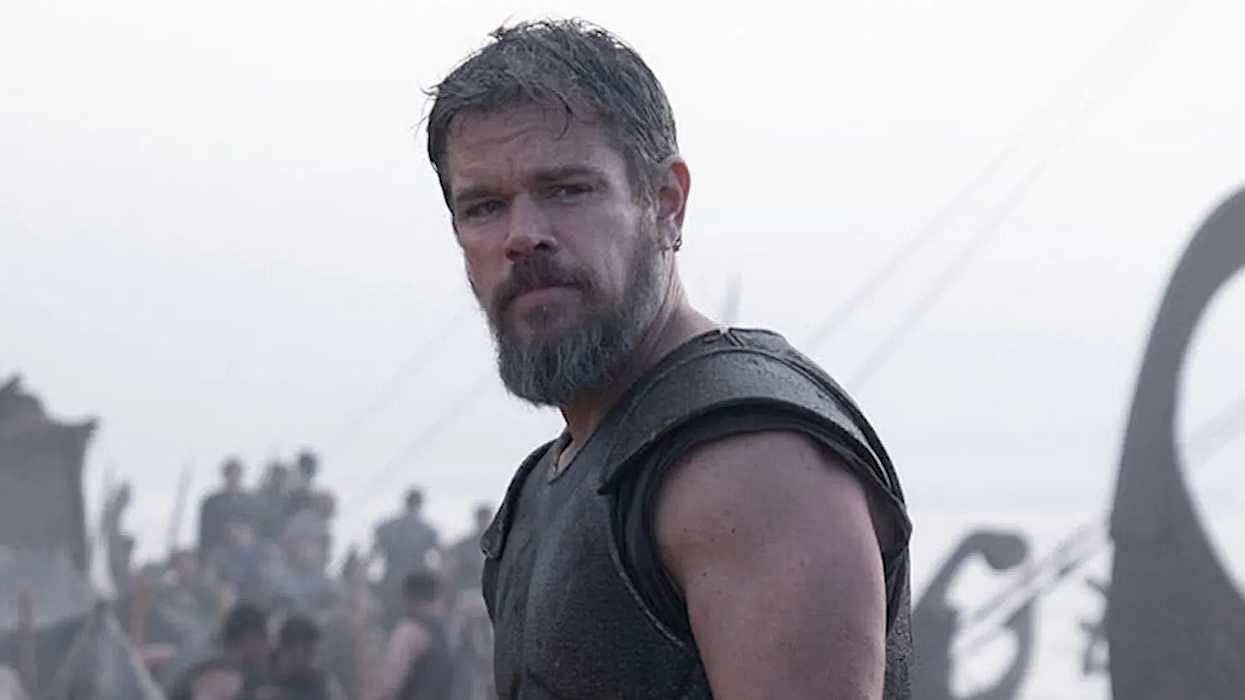
Neither film offers a neat, tidy answer to either question. We still live in the aftermath of Oppenheimer’s choices. But, with regard to The Odyssey, I was moved by how unexpectedly contemporary the themes felt. We may no longer be guided by Zeus, but we live in a world that, until recently, was held together by an accepted set of norms – norms that are only made strong by our collective decision to recognize and live by them. We have begun to chip away at those norms, the dangers of which are well explored within a story written 3000 years ago.
Now that it’s our chapter, we have to ask ourselves – what will we allow ourselves to become?
It's surely a question that will be weighing on me from here on out.